Tue Sep 1


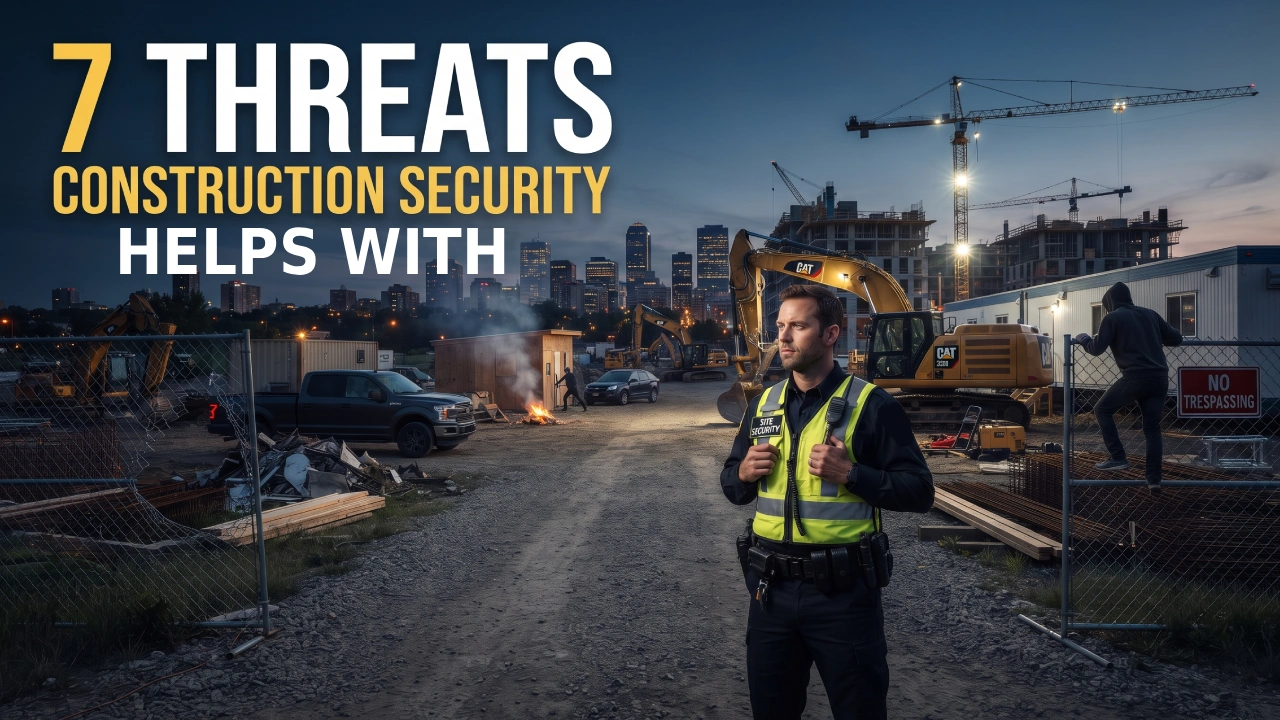
The crews leave, the machinery stops, and the gates close. But what happens when a busy construction site suddenly becomes quiet? A construction security guard can keep watch during those hours, looking for activity that may otherwise go unnoticed.
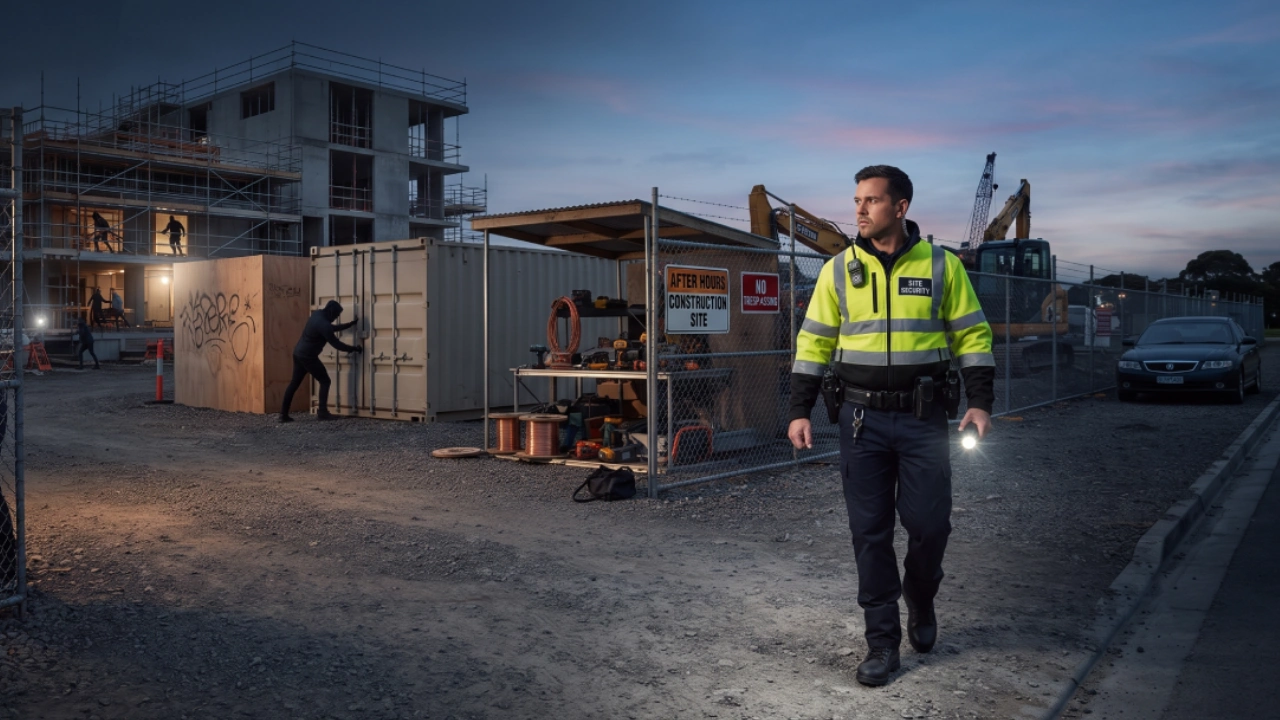
A site that feels empty is not necessarily inactive from a security standpoint. Tools remain inside unfinished buildings. Equipment may sit behind temporary fencing. Materials can be stored outdoors, while several gates and delivery points may remain accessible.
For construction managers in Edmonton, these conditions can create practical security concerns after working hours. The issue is not about assuming that an incident will happen. It is about noticing warning signs and responding according to the site's security procedures.
Here are seven threats our security guards can watch for on construction properties.
During the day, construction sites have movement everywhere. Workers arrive, deliveries come through the gates, machinery operates, and supervisors move between different areas.
Then the workday ends.
The number of people drops sharply, but the property still contains valuable items and unfinished structures. That change can make it harder for site managers to notice unusual activity from a distance.
Consider an Edmonton construction project with fencing around the perimeter. Several pallets of materials are stored near one side of the property. A skid steer sits close to a secondary gate. Workers have gone home, and the main office is empty.
A damaged section of fencing might not be noticed until the next morning.
Other factors can also create security concerns:
This situation is where construction site security becomes a practical consideration. Regular observation can help identify unusual conditions before they become larger site-management problems.
A toolbox may look ordinary during the workday. After everyone leaves, however, it can represent company property sitting in an unattended area.
Construction equipment theft can involve power tools, machinery, fuel, company vehicles, copper, wiring, and other materials. The exact exposure varies from one project to another.
Our security guards can watch assigned access points, patrol designated areas, observe movement around stored equipment, and report activity that appears inconsistent with site procedures.
Warning signs may include:
For example, imagine a construction site where a contractor normally removes equipment at the end of each shift. One evening, a vehicle arrives after the scheduled departure period and stops beside the equipment storage area.
A guard can observe the situation, follow the site's instructions, document relevant details, and notify the designated contact when required.
The goal is not to assume wrongdoing. It is to notice activity that deserves attention.
That gap in the fence may look minor.
It may also be the first visible sign that someone has entered an area without authorization.
Trespassers can access construction sites through damaged fencing, open gates, unfinished sections, or unsecured access points left by workers.
A construction security guard can monitor assigned entrances and perimeter areas while checking whether people and vehicles entering the property match the site's access procedures.
Signs may include:
Suppose a project has a secondary gate used only for daytime deliveries. At 10 p.m., security personnel discover the gate open and an unfamiliar vehicle parked nearby.
Rather than ignoring the situation, security personnel can follow the site's established procedure, observe the area, document relevant details, and notify the appropriate contact.
A broken window is easy to notice.
Damage hidden behind a temporary structure may exist.
Construction site vandalism can affect windows, walls, fencing, signs, electrical components, machinery, temporary offices, and other property. Even minor damage can create additional work for site managers.
During construction site monitoring, guards can search for changes that were not present during previous checks.
That may include:
Picture a site where a section of fencing is intact at the beginning of an evening patrol. Later, the guard notices that part of it has been pushed outward.
That observation can be documented and reported rather than waiting until the morning crew discovers it.
Visible security patrols can also make it easier to notice changes across different areas of a large site.
A quiet construction property can sometimes attract activity that has nothing to do with the project.
An unknown vehicle enters, stops near an isolated section, and leaves several minutes later.
What was left behind?
Unauthorized dumping can create cleanup problems, disrupt site operations, and introduce unknown materials onto the property. Construction sites with large open areas may have several locations where dumping could occur without immediate notice.
Our guards can watch for:
A guard does not identify an unknown substance by handling it. If something appears suspicious or potentially hazardous, personnel can keep a safe distance, follow site procedures, notify the designated contact, and contact emergency services when appropriate.
Simple observation and accurate reporting can help site managers address the situation through the proper channels.
Not every security concern involves someone entering the property.
Sometimes the warning sign is smoke, an unusual heat source, damaged electrical equipment, or machinery operating when nobody should be working.
Construction sites may contain temporary electrical systems, equipment, fuel, building materials, and temporary structures. Conditions can change quickly, particularly after working hours.
During assigned patrols, guards may notice:
Security personnel are not a replacement for firefighters or emergency response teams. Their role is observation, reporting, and following the procedures established for the assignment.
For instance, a guard conducting a routine perimeter inspection notices smoke near a temporary structure. The appropriate response may involve moving away from the area, notifying the designated contact, and contacting emergency services according to the site's emergency plan.
The key point is simple: a warning sign noticed early can be reported sooner.
A vehicle driving past a construction site is not automatically a security threat.
But repeated activity may deserve attention.
A guard conducting construction site patrol can notice patterns that are difficult to identify when no one is regularly watching the property.
Examples include:
Imagine the same vehicle appearing near a site entrance several evenings in a row. A guard can document the vehicle description, time, location, and observed activity according to the assignment's reporting procedures.
That record may help a site manager determine whether the activity has a legitimate explanation or requires further attention.
Observation does not mean assuming intent. It means recording what actually happens.
Could you please clarify who is expected to be on the property at 11 p.m.?
That question matters when a construction project has defined working hours.
After-hours access can involve former workers, contractors, visitors, delivery drivers, or other people who have no current reason to enter the property.
A security guard can monitor assigned access points and compare observed activity with the site's access procedures.
Potential warning signs include:
The response depends on the site's instructions and the circumstances. Security personnel can verify access where required, observe activity, document incidents, and notify designated contacts.
A construction security guard does not simply stand at one gate for an entire shift unless that is what the assignment requires.
Construction security duties can include several assigned areas and activities.
These may include:
The exact duties depend on the property, client instructions, operating hours, site layout, and security plan.
On a large Edmonton project, for example, one patrol route may cover several sections of the perimeter. Another assignment may place greater emphasis on access control and visitor verification.
The point is to maintain an active presence according to the site's needs rather than treating every construction property as identical.
Small details can become important when they appear in the wrong place or at the wrong time.
During construction site monitoring, guards may watch for signs such as:
These signs do not automatically prove that an incident is taking place. They provide information that can help the appropriate people assess what is happening.
When crews leave, a physical security presence can provide another set of eyes across the property.
A construction site patrol may involve scheduled or irregular checks of assigned areas, depending on the security plan.
Typical duties can include:
For example, a guard may begin at the main entrance, inspect the assigned perimeter, examine equipment storage, review restricted areas, and document any conditions that differ from the previous patrol.
The frequency and route depend on the site.
A compact residential project may have different needs from a large commercial development with several buildings and multiple access points.
That flexibility matters because construction security should reflect the actual property rather than rely on a single routine for every site.
Sometimes the issue is not a dramatic security breach. It is a small oversight repeated every day.
An unsecured gate can create an unnecessary access point. At the end of a shift, gates should be checked according to the site's closing procedure.
Temporary fencing can define a boundary, but it does not show who is entering or what is happening inside. Damaged sections can also go unnoticed without regular checks.
A moved barrier, damaged lock, or unfamiliar vehicle may have an innocent explanation. It may also indicate a developing issue. Recording these details gives site managers more information.
Repeatedly observing unusual activity without documentation can make it challenging to identify patterns. Incident reports can create a timeline showing when, where, and how often something occurred.
A broken fence, an unauthorized visitor, smoke, and suspected theft require different responses. Site procedures should define how personnel handle different circumstances.
Edmonton continues to have construction activity across residential, commercial, road, and infrastructure projects. These sites can vary widely in size, layout, operating schedules, and storage needs.
One project may have materials stacked beside a roadway. Another may have heavy equipment spread across a large property. A third may have several entrances used by contractors and delivery vehicles.
These differences affect construction site security.
Weather and seasonal conditions can also change site conditions. A gate that was easy to monitor during one period may become more difficult to access during another. Temporary structures, equipment placement, and construction phases can also change the security of a property.
For Edmonton construction managers, the practical question is not whether every site faces the same threat.
It is whether the current site layout, equipment, access points, operating schedule, and after-hours activity justify additional monitoring.
There is no single answer for every project.
However, construction managers may want to assess security needs when:
A site assessment can help identify which areas need attention and what duties should be included in an assignment.
The goal is to match the security arrangement with the actual conditions of the property.
A construction security guard monitors assigned areas of a construction property according to site instructions. Duties may include access monitoring, perimeter patrols, visitor checks, equipment-area observation, incident documentation, and reporting unusual activity. The exact responsibilities depend on the site's layout, schedule, client requirements, and security plan.
Construction security guards can watch for signs of theft, trespassing, vandalism, unauthorized dumping, unusual vehicles, after-hours access, and certain fire or safety-related warning signs. Guards observe and report conditions within their assigned duties. They cannot guarantee the prevention of every incident.
Yes. Overnight monitoring can be arranged according to the site's schedule and security requirements. A guard may patrol assigned areas, monitor entrances, assess perimeter conditions, document incidents, and communicate with designated site contacts. Duties vary according to the assignment.
Yes. Access-point monitoring can be part of a construction security assignment. Guards may check gates, verify authorized visitors where required, observe vehicles, and report attempts to enter restricted areas. Site procedures determine how access checks are performed.
Equipment can remain on site after workers leave, along with tools, fuel, materials, and company vehicles. Regular monitoring can help identify suspicious activity, access issues, damaged fencing, or other concerns sooner. The level of monitoring should reflect the site's equipment, layout, access points, and operating schedule.
Start by reviewing the site's location, operating hours, access points, equipment, storage areas, and current security procedures. From there, discuss the required duties and coverage with a security provider. For Edmonton construction security, you can contact National Security Guard Protection Services to discuss your site's requirements.
A construction site can look entirely different once the workforce leaves.
The machinery becomes quiet. Access points remain. Materials stay in storage. Unfinished structures create areas that may be difficult to observe from a single location.
That is why construction site security can involve more than a locked gate or temporary fence. Regular observation, access monitoring, patrols, documentation, and clear communication can give site managers more information about what is happening after hours.
At National Security Guard Protection Services, we provide security coverage based on the requirements of the assigned property and site procedures.
Phone: +1 905-965-2260
Address: 10708 97 St NW #204, Edmonton, AB T5H 2L8, Canada
Call National Security Guard Protection Services at +1 905-965-2260 to discuss security coverage for your Edmonton construction site.